
In recent years, crypto scams have multiplied, taking various forms and relying on well-established methods. Phishing, fake projects, romance scams, and pyramid schemes: these traps aim to steal your cryptocurrencies by exploiting the slightest flaw. Discover the 7 most common crypto scams and the principles to follow to protect yourself.
The world of cryptocurrencies is built on a promise: to give individuals back financial control. But with this autonomy also comes increased responsibility, particularly when it comes to security .
For crypto investors, protecting their assets is no longer limited to using a crypto wallet or enabling two-factor authentication. Today, one of the most overlooked threats remains personal data leakage.
Cybercriminals actively target cryptocurrency users, aware that they may be holding considerable sums of money. A simple leaked email or password can be enough to compromise access to a wallet, exchange, or other crypto-related services. It is therefore crucial to constantly monitor your digital footprint.
This is precisely what Surfshark Alert offers , a tool that scans compromised databases on the Internet in real time .
If your email address or personal information appears in a known breach, you will be immediately alerted so you can take immediate action: change your passwords, activate additional security measures, or contact the relevant departments.
This ability to quickly detect risks helps prevent hacking, identity theft or theft of your cryptos .
Want to try this service for free? You can now use Surfshark's data leak checker to see if your email address has already been exposed 👇
Now discover the 7 most common crypto scams , each with concrete advice on how to recognize them and protect yourself effectively 👇
1 – Phishing: the most common scam to steal your cryptos
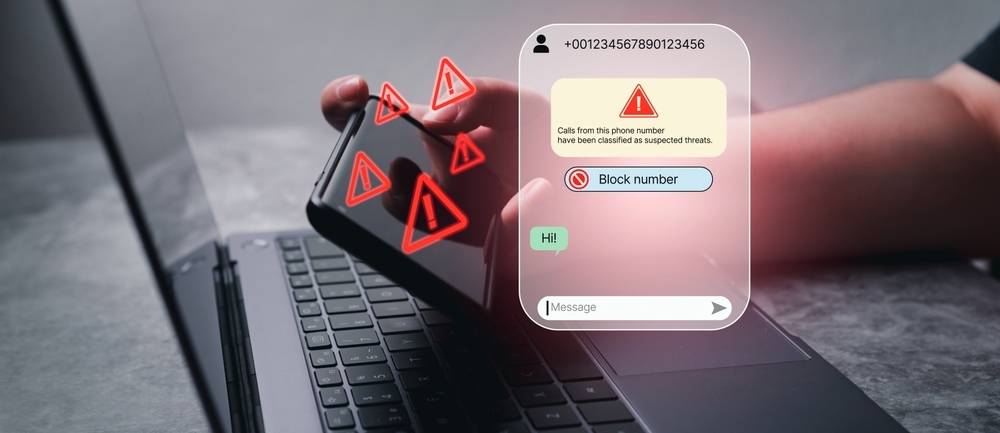
Phishing is the most common scam in the crypto ecosystem. Its principle? It tricks you into disclosing your sensitive information (logins, passwords, private keys, 2FA codes) by making you believe you're communicating with a trusted entity.To do this, scammers impersonate exchange platforms (Binance, Kraken), crypto wallets (MetaMask, Ledger) and even regulatory authorities (AMF, SEC).
Why is phishing so dangerous in crypto?
- No cancellation possible: Unlike traditional banking fraud, crypto transactions are irreversible.
- Instant Theft: With your credentials or private keys, hackers empty your wallets in seconds
- Domino effect: If you reuse the same password elsewhere, other accounts may be compromised
5 surefire signs of a phishing attempt
- A suspicious email address. Example: support@binance.support vs. @binance.com
- Linking to a misleading URL. Example: “binance-support.com” instead of “binance.com”
- Unusual requests like tech support asking for your private keys or a file download
- The sense of urgency with messages like: “Your account will be suspended in 24 hours!” or “Suspected fraud - click immediately”
- Approximate spelling and unusual wording such as: “Dear valued customer”
2 – Fake trading robots and AI platforms
Artificial intelligence and automated trading have given rise to a new generation of sophisticated crypto scams . These scams promise miraculous returns thanks to "ultra-efficient" trading robots or "AI-powered" platforms.In reality, these tools don't generate any profit—they only serve to steal your funds. Victims, often beginners lured by tempting promises, discover too late that:“100% winning” robots do not exist (trading always involves risks)
Secret algorithms are a pure invention (no transparency on how they work)
The results displayed are completely falsified with rigged charts and trade histories)
⚠️ The classic trap: The platform first shows you "earnings" to encourage you to invest more... before disappearing overnight with your funds. Stay vigilant: in crypto, if an offer seems too good to be true... it is.
Why are these scams so effective?
- Technological seduction: AI impresses and intimidates, which deters questions
- Illusion of Control: Dashboards Show Real-Time (Fictitious) Gains
- Herd effect: False testimonies create a feeling of not wanting to miss the train
5 signs that don't lie
- Promises of abnormally high returns such as “+10% per day guaranteed”
- The total lack of regulation (no license from the AMF, SEC, etc.)
- Too perfect interfaces with real-time graphics (too good to be true)
- The pressure to invest quickly like “Offer limited to 50 places!”
- Teams made up of “experts” who cannot be found on LinkedIn or who have no real verifiable experience
3 – Ransomware: when your files become a bargaining chip
Ransomware is one of the most serious cyber threats in the crypto ecosystem . This malware encrypts your files (documents, photos, databases) and demands a ransom in cryptocurrency to unlock them.In 2024, these attacks exploded (+62% according to Europol), targeting both individuals and businesses. Hackers exploit three main vulnerabilities:
Infected attachments in seemingly legitimate emails
Pirated software downloaded from dubious sites
Unpatched security holes in your systems
⚠️ The ultimate trap: Even if you pay the ransom (often in Bitcoin), there's no guarantee you'll get your files back. According to Coveware, 42% of victims never see their data again.
Pirated software downloaded from dubious sites
Unpatched security holes in your systems
⚠️ The ultimate trap: Even if you pay the ransom (often in Bitcoin), there's no guarantee you'll get your files back. According to Coveware, 42% of victims never see their data again.
Why does ransomware thrive on crypto?
Bitcoin/Monero payments are difficult or impossible to trace
Crypto transactions are irreversible
Crypto transactions are irreversible
5 signs you're infected with ransomware
- A ransom demand appears on your screen with a countdown
- Your antivirus is disabled without your intervention
- Your files are corrupted and you cannot interact with them
- Unknown processes are consuming 100% of your CPU
4 – “Pig butchering”: the emotional scam that drains your wallet
Pig butchering is a particularly perverse crypto scam that combines psychological manipulation and financial bait.This multi-part scam can last for weeks or even months, all the while deceiving you.
How a pig butchering scam works
- First contact: A stranger approaches you on a messaging app (Telegram, WhatsApp, etc.) under a false identity
- Taming: Daily discussions to create a friendly or romantic emotional bond
- Financial Trap: Subtle Proposal of a “Great Crypto Investment” with Falsified Evidence
- Escalation: You are encouraged to invest more and more until the final “butchering” (disappearance of the fraudster)
5 signs that you are being targeted by such a scam
- Your new “contact” talks to you about cryptos very quickly
- He/she shares “exceptional winnings” on an obscure platform
- He offers to help you invest
- The person refuses any video call or physical meeting
- The person is trying to convince you that this is a limited opportunity

5 – Crypto Ponzi Schemes: The Illusion of Passive Income
Ponzi schemes disguised as crypto projects are among the most persistent and devastating scams . Under the guise of network marketing (MLM), these scams promise huge passive incomes, but only sustain themselves by constantly attracting new victims.How does a Ponzi scheme work?
- Bait: You are sold a “revolutionary investment” with very high fixed returns like 10% per month)
- Recruitment: You must sponsor other members to earn commissions
- Collapse: When new entrants are no longer enough to pay the old ones, the system collapses and your money disappears.
5 signs that don't lie
- Earnings depend mainly on recruitment (no real activity)
- The project has no concrete product
- The founders are untraceable or inexperienced
- Returns are “too stable” like 2% per week without any fluctuation
6 – “Rug pulls”: when designers disappear with your money
Rug pulls are one of the most frustrating scams in crypto. Within hours, a promising project can evaporate, leaving investors with worthless tokens.This method is very common with memecoins, as it is extremely easy to create one, add some marketing, and artificially inflate the price before selling everything.
The two types of rug pulls
The soft rug:- Creators quietly sell their tokens
- The price is gradually collapsing
- The team remains "officially" present
The hard rug:
- Abrupt withdrawal of all liquidity
- Deletion of social networks
- Complete disappearance of the team
5 warning signs of a rug pull
- The team is anonymous or uses fake LinkedIn profiles
- The majority of tokens are held by a few wallets
- The smart contract allows sales to be blocked
- Liquidity is locked for a very short period of time
- The website and social media are very new

7 – Fake crypto training: the scam that sells you a dream
The cryptocurrency training market has become a veritable hotbed of scams, with pseudo-experts selling useless advice at exorbitant prices. Worse still, some training courses are simply bait to push you into fraudulent investments .Scammers' techniques
- Misleading ads on YouTube/TikTok like: “Get rich in 7 days!”
- Free webinars that end with a hard sell like “$2,000 VIP offer!”
- False testimonies from participants in this training
- Psychological pressure with phrases like: “This training will no longer be available after today”
5 signs of questionable training
- The trainer cannot be found on LinkedIn or has no verifiable history
- The results shown are false
- The trainer promises to reveal a secret that can make you rich quickly
- The price is disproportionate. Example: €5,000 for 10 basic videos
- The training directs you to use a dubious platform