
The cryptocurrency market is very young, and the lack of regulation surrounding it contributes to its strong attractiveness.
Indeed, the significant volatility of these assets allows for significant gains, which attracts traders and novices.
But it is important to keep in mind that even if you can win big, you can also lose everything. When buying cryptocurrencies, we are therefore not sure that prices will stay high for very long or that they will continue to rise indefinitely.
Fortunately, to protect themselves from a dump, traders can set Stop Losses on their positions. In this article, we will see what a Stop Loss is and how to set one up.
Functioning
A Stop Loss is a conditional order , meaning it is an order that will be sent to the market after a condition is met. This condition takes the form of a price that must not be crossed. Therefore, if this price is exceeded, the position is automatically closed (the purchased cryptocurrencies are then sold).Stop Loss, unlike Take Profit , protects against a decline in the market price. The selling price must therefore be below the current market price.
For example, I open a position of 1 Bitcoin at $10,000/BTC. I also set a stop loss of $9,500. If the price reaches $9,500, my position will close automatically. This way, I could recover 95% of my initial investment.
Please note that the Stop Loss is intended to protect against price drops. However, in some cases , it can be triggered at the lowest price (at the dip ). This usually happens in markets where volumes are low.
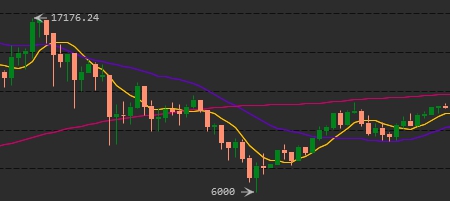
In the example below, if you had set a Stop Loss at $6,000, it would have triggered at the low, which would not have been a very good trade.
Stop Loss is part of the same family as another conditional order called Take Profit , see the article about it to learn more.